Grow Trees… Or Something – Ludum Dare

So this is something I didn’t expect to happen, around two weeks ago was Ludum Dare, where we all had only 48 hours (or 72 for jams) to develop a game, however because I had plans to go to a party that was some distance from home, I had much less time. Despite that I still managed to finish something, although honestly was disappointed I didn’t have much to show, so I could go and vote on other entries.

You can play my entry for Ludum Dare 34 here, but here’s my post mortem as written on the Ludum Dare website.

Continue reading

Feeling Superstitious?

I would make this my obligatory “I’m in” post, but I thought I’d make this a bit fun and tell you some weird or crazy fact when it comes to me and game jams, and in particular Ludum Dare: I’m cursed.

Now here me out, I am aware this sounds weird and possibly crazy (because it is), but even if it’s just a sheer coincidence or just bad luck, there is an unusual pattern that has occurred whenever I take part in game jams, and this has been happening through most of the game jams I’ve taken part in since 2013.

The “curse” goes as follows: Every game jam with an even number will either lead to no completion or failure.

That’s not to say that the jams with odd numbers have lead to roaring successes but the majority of my game jam participations which lead to finished and submitted games and some have had much more positive reception than I’ve hoped for, which is saying something for someone who hasn’t (yet) reached the top 100 in any Ludum Dare category. Heck, on my own Ludum Dare author page there are only entries from odd numbered LDs.

So if you are interested, I will show you my evidence and also add in some lessons that were taken from them.

Ludum Dare 28:

Most of why this jam went wrong for me can be summed up in the post mortem I wrote. The short version was that I was collaborating with another person, and we left pretty much everything from what tools we would use, to our game jam idea to the last minute, and as a result we made an unfinished game that we felt embarrassed to keep online so I reached out to Ludum Dare to have that game removed. I don’t have any criticism to give Code_Assassin, but we pretty much agreed that if we were to collaborate again, we’d definitely need a week or so to prepare what games we could make and what tools we would use.

Lesson: Prepare well in advance.

Ludum Dare 30:

So this one I did announce I would participate, and I was joined into a team this time. So how come I didn’t submit a game at this one? Well the answer was that a game was made, and submitted by the other programmer, LiquidBrewing, the game being Cardboard Giuseppe. However as you can see, no one voted for it, and only two comments, reasons why I’m not so sure. During development there were some issues, namely that one of the artists dropped out (meaning I ended up doing some artwork in order to finish the game up) and it didn’t help that I was away on Friday and Saturday. I guess it wasn’t a surprise that the majority of the code that I wrote never got used in the game.

Lesson: Leave some days free to work (especially in teams)

Ludum Dare 32:

I couldn’t participate in this one, although I cannot find a reason why. I can recall telling people I could not take part because I was going to be away somewhere, but I cannot recall what event prevented me from taking part.

Global Games Jam 2014:

Just to show this doesn’t just occur at Ludum Dare, here’s Global Games Jam. I’ve participated at GGJ for three years running and 2014 was the only year that had an incomplete entry. This one had a much larger team of seven people, and yet the reason we never finished was once again, down to tools. We all agreed to use Unity, a great choice if it wasn’t for the fact that most of us never used Unity before, and our venue actually had rooms with didn’t permit the use of Unity (although Unreal Engine was accepted). It was a shame, since we had an idea of an RTS where the visuals and language of the game would depend on what side of a revolution you chose (kinda like Command and Conquer, now that I think about it). On the plus side, I managed to write a sophisticated and fully designed graphical user interface, just a shame the gameplay never became fully realised. I later wrote a post mortem of the jam so you can see the full details of what happened near the time it occurred.

Lesson: Use and prepare tools you know how to use.

So whatever reasons of this, I’m still taking part in this LD, even if it’s number 34. Whether or not the incidents above are the cause of an actual curse, and these aren’t the only ones, I still enjoy the learning process and hard work I put into making small and quick games every year. I look forward to seeing what cool stuff gets created and I hope, despite already having a planned trip to London…Ah well, going to London to see friends during a Ludum Dare didn’t stop me at LD31!

#GBjam, Game Development and Work Updates

I’m back and ready to update everyone on what’s been happening since I went to Japan last month, which was an awesome holiday where I got to go to the cities of Tokyo, Kyoto, Osaka and Sendai, with highlights including seeing foxes at the Zao Fox Village, walk around Akihabara’s arcades, game and electronic stores, dressing up as a Samurai, going to the Ghibli Museum and Nintendo’s Old Headquarters! Despite being in very humid weather, and both my sister and I carrying our bags from hostel to guest house to hostel almost every night, we were able to see so much and yet miss out on quite a lot. We talked with other travellers and heard about seeing Mt Fuji and Sumo Wrestling in Nagano among others, but I think I can see them another time.

But only a few weeks after I got back, I was out again for a week in Ireland…which is why the longer than normal absence. I got to see some of the big towns and cities from Cork to Dublin, as well as a lot of countryside, however it did help bring inspiration for a game I recently made.
Welcome to Kilkenny Pub Brawl!

Continue reading

Off to Japan

I’m going to keep this one brief, I’m going to be in Japan between the 16th and 26th July, so I may not be able to post much game development related stuff. This trip has been a dream of mine for over 12 years and I’m looking forward to seeing all the great stuff in the country.

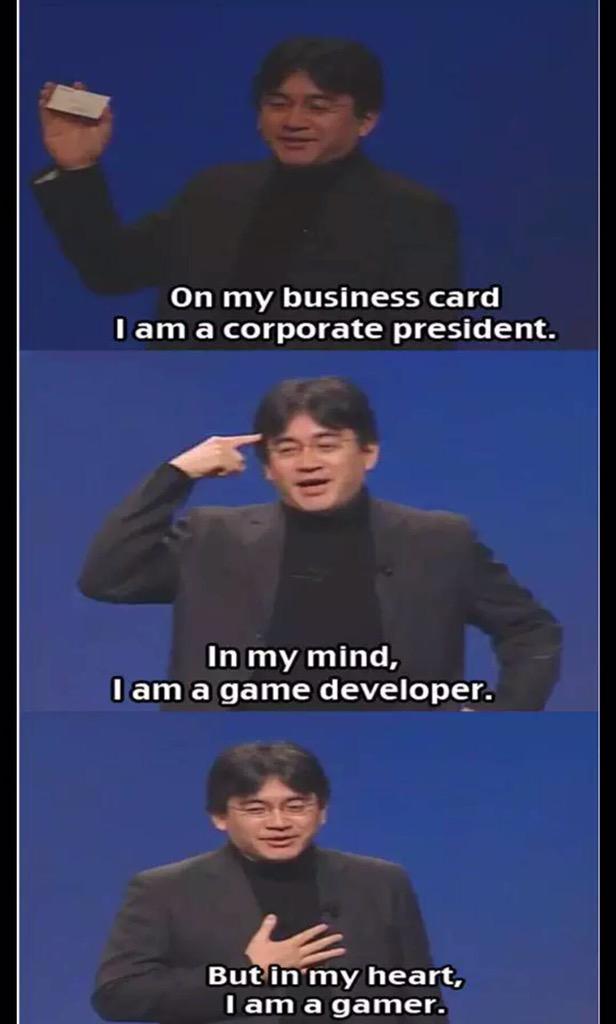
I’m also aware of the recent news of the passing of Satoru Iwata, CEO of Nintendo, on July 11th. I wish his family and friends well during the time of mourning, knowing that fans of the games he has made and the company he has run for many years show their support.

Embedded image permalink

IRDC 2015 Review

So to sum up last weekend, when I went to Nottingham for the International Roguelike Developer Conference 2015’s UK event, I’m not kidding when I said I had little expectations, considering that the Roguelike genre is still fairly new to me, despite spending a year researching procedural level generation for my University dissertation. Despite this, I had a great time and was able to gain a lot from the games, the genre and the role of procedural generation from these two days.

Day Zero

Although I have met the event organiser Mark Johnson and Roguelike developer Darren Grey from the PROCJAM conference organised last year, I wasn’t sure if I was able to meet anyone at the pre-meetup, especially since Mark unfortunately went down with food poisoning before the pre-meet began. However I decided to head off to the Bell Inn and see if I could find anyone.

By chance, I went to the bar and a man sitting at the table asked me “You here for IRDC?”, that man was Johannes Kristmann, and with him was Paul Jeffries. We talked about games, had drinks, and they joked about IRDC events of the past and eventually more people showed up, including Alan Charlesworth, Tom Betts and Ido Yehieli. We all decided to have more talks and drinks at Darren’s apartment block until we all decided to head to our respective hotels to prepare for tomorrow.

Day One

These were all the talks that were given that day (taken from Mark Johnson’s blog):

1025 – “”And [my bot] vowed to return victorious!”: Spelunky as an AI Benchmark” (Tommy Thompson)
1050 – “Dungeon Crawl Stone Soup Development” (Pete Hurst)
1115 – “Alternative Death Systems” (Darren Grey)
1140 – “Generative Design” (Paul Jeffries)
1205 – “Modability and You” (DarkGod)
1330 – “Making a Roguelike that uses Twitter Data” (Sean Oxspring)
1355 – “KeeperRL Development” (Michal Brzozowski)
1420 – “The Curious Expedition Development” (Johannes Kristmann)
1445 – “Murder Puzzle – No Longer a Roguelike” (Ido Yehieli)
1510 – “Scaling Brogue“ (Flend)
1535 – “Creating a Procedural Level Editor” (Me)
1600 – “Sir, you are Being Hunted Development” (Tom Betts)
1625 – “Algorithmic Generation of Global Racial, Cultural, Religious, and Architectural Variation” (Mark Johnson)

There were so many great talks, some were really funny and others were really informative, I even managed my talk, despite all my nerves. I spoke about a part of my University dissertation, the Procedural Level Editor.

https://i0.wp.com/i.imgur.com/LpRWHmy.jpg

https://i0.wp.com/i.imgur.com/N96tsAW.jpg

If you didn’t catch them on Twitch, all of the talks will be online on Youtube in the coming weeks. These talks were followed by curry, and then drinks at Ye Olde Trip to Jerusulem, possibly the oldest pub in England.

https://i0.wp.com/i.imgur.com/s4TEZqW.jpg

Day Two

This was an experimental part of the day, where members of the public got to try out some classic and modern roguelikes such as DoomRL, Angband and Incursion among others, as well as a selection of board games that possibly inspired Roguelikes.

https://i0.wp.com/i.imgur.com/6yAauak.jpg

https://i0.wp.com/i.imgur.com/lgqNwtW.jpg

https://i0.wp.com/i.imgur.com/Cd4yqz5.jpg

So I had a really fun time, and got to speak to a lot of talented game developers about procedural generation and gaming in general. I got to talk about my University dissertation, and I also got to speak on roguelike radio about the conference, which should also be online soon as well.

https://i0.wp.com/i.imgur.com/Sa877Nz.jpg

So I think it’s time to announce my new main project, during my dissertation I wrote a short prototype game to demonstrate the procedural level editor. I’ve decided to extend this game to be Gemstone Keeper, the roguelike twin-stick shooter. It will use the Procedural Level Editor, which I will also release for public use when it comes to a stable enough point.

https://i0.wp.com/i.imgur.com/3R45Qzw.gif

ThreeThingGame and the Ricoh2DFramework

Between the 11-12th of June, I went up with a friend and fellow Windows Games Ambassador Aaron Smith, along with a games design student Nathan Holding to the University of Hull for ThreeThingGame, the University’s 24 hour games jam. The premise is that each team was provided three words, and were tasked with making a game that incorporated them. The games would be judged on how well they fit the three things, and the quality of the game overall and the winning teams would get prizes.

This was going to be an interesting event for all three of us, as despite being used to travelling around several campuses for events, Hull was way far out for us. We were also aware that the majority of students there had been at ThreeThingGame before and new how it all worked. However Aaron and I were a bit more confident in what we could pull off together since we went through a games jam one week prior, where we learned to have a proper functioning version control system that the tools can work with, as well as having an actual artist working with us this time. Our three words were Room, Moon and Lune, and from that we made a Lunar Lander style space game where you avoided asteroids and landed on moon bases.

We also had an additional tool to work with, my Ricoh2DFramework. I don’t think I’ve mentioned it before on this site, but the Ricoh2DFramework is a framework for MonoGame. The purpose of the framework is to provide classes to assist with graphics, collision, input and audio among other functions. I was actually quite eager to use Ricoh2D in a game development project to see how well it works practically.

Game Development went rather well, and while there were some small issues found in the Ricoh2DFramework, they were easily fixed and all of those changes have been uploaded to the Ricoh2DFramework’s repository. There were also some performance issues that required some work arounds in order to avoid (slow downs, glitches and crashes galore), but in the end we finished the game.

What went right:

  • Proper source control: Using C# and MonoGame with Github is much better than the last games jam at Stafford, where we tried to use Unity with Git. Overall it was a nightmare back then to merge all the changes and ensure the project work. Using a system that is completely text based and readable made the process much more easier.
  • More prepared: Using the Ricoh2DFramework definitely saved some time in developing the game, and even though the framework had issues they were much quicker to deal with instead of having to build everything up from scratch.
  • Having an artist: Definitely enables the team to work on the game while assets are being created, instead of having to be made during or after development where issues can arise.

What went wrong:

  • Didn’t sleep enough: All three of us, me especially, thought we could spend the entire night working on the game. We didn’t. I could barely stay awake after literally staying awake for 24 hours, even with an abundance of food, drink and snacks to help us keep our energy.
  • Technical issues: While some performance issues were most likely due to some of the original code that was developed for the game, we also had numerous unexplained crashes from Microsoft and SharpDX libraries. This was especially bad when the game crashed unexpectedly with an unhandled exception while judges were looking at our game. This could’ve been one of the reasons why we didn’t get a place in the rankings, but since we were still using the Technical preview, hopefully issues would be ironed out afterwards.

Overall, I rather enjoyed ThreeThingGame. It’s a neat idea for a games jam and everyone at the University of Hull was very enthusiastic and eager to make games, which makes it even more impressive as the University doesn’t have a specialist games course unlike Staffordshire University.

Now it’s back to the Procedural Level Editor and my newest game project Gem Finder, where I’ve already started on new features…

Speaking at International Roguelike Developer Conference 2015

On June 27th-28th, there will be a two day unconference on Roguelike Games at the National Video Game Arcade in Nottingham. IRDC has been running since 2008 and each year has taken place in a different country, but this year two unconferences have been organised, with the other one being in Atlanta back on May 30th.

UltimaRatioRegum

UltimaRatioRegum, one of the many modern day roguelikes likely to make an appearance.

Today I can confirm that I will be one of thirteen speakers at the IRDC, where my talk is titled “Creating a Procedural Level Editor”. I will be talking about the development of my dissertation project, the Procedural Level Editor, which I initially wrote about more than two weeks ago. The talk will be on the Saturday, and there will be a public showing on Sunday where attendees will be able to play a load of classic and modern Roguelikes. More information about the conference itself can either be found on the organiser’s page here, or on the IRDC Europe page on RogueBasin.

https://i0.wp.com/www.leftlion.co.uk/images/galleries/479/DaveParry-LeftLion-NVA-0585.jpg

National Videogame Arcade in Nottingham

If you want to watch the talks, but do not have the means to travel to Nottingham, not to worry, as with the Atlanta Conference, the conference will be streamed live so you can watch it all. I shall pass around the link nearer the time of the event.

University Finished

Hey everyone, sorry it’s been a while, but for the last few months I have been incredibly busy with University work, plus I have had some technical difficulties which I’ll explain further later on. However, the good news is that it’s all finished!

That’s right, all of my remaining assignments, which includes one mobile game written in MonoGame, one PC game developed in Unreal Engine 4 with a full game development team of artists, designers and other programmers, my thesis on Procedural Content Generation to Create Levels in Games, and the combination of a Procedural Level Generator, Procedural Level Editor, and 2D Tilemap Shooter which makes up my dissertaion artefact, were all finished in time to make up my full University degree!

Continue reading

Glow Drop DX and Global Games Jam are Out!

Over the last week, I’ve technically had to prepare for two releases, and guess what? Both games are out, and I’ve updated the game menu to include links to them! It’s pretty cool how both games were originally made at 48 hour game jams, and both are being updated as we speak. Feel free to read on about my experiences with Global Games Jam this year, and try out these two releases as soon as possible, all feedback is awesome!

Glow Drop DX

We Are Surrounded

Continue reading

Ludum Dare 31 Favourites So Far!

So after rating 100 games for Ludum Dare, I thought I’d talk a bit about a few of my favourites from the jam. They may not be the best out of the competition, but these were the ones that I find have an aspect of good entries that each of these succeed at.

Tightrope Theatre

This is the entry done by brilliant flash game developer Jussi Simpanen, aka AdventureIslands. He always does games for jams big and small and his entries usually bring a quirky design and incredible polish to them, and this one is no exception. In Tightrope Theatre you must travel from A to B, all while riding a unicycle avoiding fire, spikes and the ground below. The entire game is 24 levels long, and feels very complete for a game done in two days, although you kind of wish there was more. Knowing that Jussi tends to add new stuff to his entries every now and then, maybe there will be more to this entry.

Jumping ‘n Jumping

This is an example of how you should achieve an innovative game in 48 hours, you use one mechanic with a unique spin and give it as much potential as you can. In this case, the mechanic of the game is jumping, and the unique spin is that your jumps are limited, but will increase depending on how you play. Eduardo uses the mechanic in a room where you have to jump to survive and you get this gem.

Screen Mover

Most game jams have a theme, and as a developer you are free to interpret that theme to whatever for your game: you can use a literal route (in LD31, that would mean literally running the entire game on one screen), the metaphorical route or the technical route. With Screen Mover, Sh1rogane decided to go beyond literal and technical with the theme to produce something that may look like a simple platform prototype, until you quickly realise you have to move the game window to progress. The only issue with this idea is that keyboard input it locked while the window moves, but the post jam version does fix this.

The Hyperbeam

Sometimes you don’t have to make a game that’s fun to make it a good entry, you can tell a story, show off some great music or in this case, make some really beautiful graphics. The puzzle game elements are clever, but this game is really good at showing off bloom and neon. It just makes it look wonderful, and the music is really soothing as well. As you may tell from my entry, I love neon glow, and this game does a great job at showing it off.

Swotch

If all else fails, just make a game that is fun to play, and make it addictive for an added bonus. This game’s style reminds me a lot of Terry Cavanagh’s Super Hexagon, and since the developer is planning an Android/iOS release, I recommend him get Chipzel to do music for the game.

Don’t forget to play my entry Glow Drop if you haven’t already.