Game Developers on Patreon

I remember several months back during the #IndieDevHour on Twitter, someone asked about using Patreon to fund their games development.

https://pbs.twimg.com/profile_images/458690209660416000/bWhe-J8I.pngBack then, Patreon was growing in popularity for independent funding of artists and writers by letting people be regular paying patrons. If you look at the current roll of Patreon Projects, you can see Youtube video producers, bloggers, webcomic creators, podcast producers, musicians and so on, all have a Patreon page. For those content producers, it appears nowadays like it’s a standard form of earning revenue for your work, as I’ve seen some of my favourite online artists and Youtube video creators use the service, both big and small.

But what about game developers and game creators, could they use Patreon to help fund their work? Could they fund a portion of their work using the Patreon system? This is what I want to discuss in this article.

When I mean game developers using Patreon, I mean specifically using it as a platform to fund their work in creating games, while some have used it to produce games development tutorials such as TheCherno, and others have used it for lets plays, this is about using Patreon for games development like how Kickstarter is used for games development.

If you dig deep enough you can find some developers using patreon for developing games. How successful they are is up for interpretation, in the examples I’ve linked some have been moderately successful enough per game/month while others are well below the hundred margins.

https://i0.wp.com/b.webutation.net/4/c/patreon.com.jpg

Why very few developers are using it however? Well it’s easy to say that unlike Patreon, crowd funding sites like Kickstarter and IndieGoGo is both a better marketing and funding platform because a lot of backers use it and people who are successful earn more money. However, I think it’s because of two clear reasons.

The first reason is that it’s very new, it only started last year and while it’s growing fast, not all of the large mediums have caught onto it. As such, not every medium knows about it as well as Youtubers, bloggers and short video producers. Asking many of my game developer friends, I found that most either didn’t know or get the Patreon system.

Another reason is the ideal scope of projects on the platform, as the majority of creators on Patreon use it for small projects that don’t require a huge budget up front, but a modest budget to sustain the creator to keep what it doing. Mix that with the amount of people actually putting money down on individual creators and you can see that it might not appear to be the most viable option.

But on the other hand, Patreon has solved one major problem that crowdfunding sites like Kickstarter is well known for, trust based delivery. Some people remember earlier this year how even after getting funded, not every project on Kickstarter had fully delivered. It’s seen as an understood risk that whatever project you are backing on Kickstarter may take years to fully complete, even if it completes at all. Patreon’s solution is to fund creators for what they have done, and not what they will do. By only paying the creator per project, or on a regular basis, patrons don’t have to feel like they are throwing money away if a creator doesn’t finish a project, and you have the option to reduce or stop pledging a creator (TBC).

A chart showing that overall, only 37% of video game Kickstarters fully deliver on what they promised.

Original Chart from evilasahobby.com

So let’s go hypothetical on this, what if Patreon, or a similar funding system, takes off and does well enough to be popular and known by many people, and those people are wanting to become patrons for talented creators, how would you go about getting people to be your patron?

You could do what’s currently being done, and have patrons pay per game. However that is only viable if you produce regular content, and that requires developing several small games on short development cycles, instead of producing one or two large games over a long period of time.

So why not use that ideal environment to work with Patreon? Some content creators work really well on a monthly basis, while producing content on a varying basis. This could be done with games by having a game being funded by patrons while in beta, where the patrons themselves can have some or full exclusivity towards testing and contributing to the game before release. I can see that model working especially well towards online multiplayer games, where the patrons themselves can act as a small growing fanbase by interacting with each other.

However, what Patreon needs is for time to grow and people to be aware of who they are and what they will do, and maybe we will find more game developers on there and show more creative ways of using a patron system.
GBJam 3 Overview

Those who have been following me on Twitter have been aware for a while of GBJam, an online games jam, and of course, I’ve been working on a game for it. Therefore as today marks the end of the third GBJam, this article will be a part-summary, part-showcase and part-post mortem of the GBJam.

Play my entry, Galaticus, on GameJolt

Vote for it on GBJam

https://gamepopper.co.uk/wp-content/uploads/2014/08/2ed40-gbjam3.jpg

GBJam Banner: Image from 2945 – Devblog

Continue reading

London Gaming & Anime Con and New Demo

Over a week ago, I was at the LGAC 2014 at the Rocket Complex. Secret of Escape was shown amongside nine other amazing indie games, and it was a brilliant experience to see hundreds of gaming and anime fans come down to the indie zone to check us out!

The Animeleague staff were brilliant to work with, providing us tables and equipment if needed, we were invited to speak at the opening ceremoney and a Q&A on indie games development so we had plenty of opportunities to get involved with the attendees.

I also had a chance to play through some of the other indie games on show, including some watch worthy titles such as Kraden’s Crypt, Legena: Union Tides, Narcisistic and #Dungeon, as well as other titles with potential such as Bard to the Future, Playtanic and some current releases like Spelmy and Space Farmers.

Of course several people had a chance to try Secret of Escape, and were thrown back by the challenging gameplay. While there were some technical issues, it’s good to see a lot of people enjoy the difficulty and showed a lot of determination to finish the eight level demo, some of them even succeeding in the LGAC exclusive challenge of finding the hidden passage to win a random mystery Steam Game Key.

In fact, you can now download an updated version of the demo right here.

The original LGAC demo had a video and the hidden passage challenge which have been removed to provide a more closer experience to the released game.

Many thanks to Animeleague for arranging the Indie Zone, as well as the other indie developers, exhibitors, vendors and attendees for making the convention such an awesome experience, I hope to return next year.

London Gaming & Anime Convention and the Indie Zone Tomorrow

Just a quick reminder of what’s happening this weekend (5th-6th July). I will be showing off Secret of Escape in the Indie Zone along with 9 other awesome indie game developers and their awesome indie games! Alongside us indies, there will be Capcom, Ubisoft, Namco Bandai and GAME in the gaming area! There is also lots of anime, music, TV, film and web related events as well, so it’s a weekend worth going to!

Here’s the full list of indie games at the Indie Zone

More info on the London Gaming & Anime Convention

Secret of Escape – One Year On

Hello everyone! I figured it’d be the best time to announce that on this day, one year ago, I uploaded a game that I worked on for a week long game jam called the Midsummer Jam Week simply named, Secret of Escape. As such, this post is dedicated to showing how much I’ve progressed in a single year, and mention some of the significant changes made over time. A lot has changed from the day I decided to continue work on this game jam entry of mine.

Continue reading

Post Mortem of Under Maintenance

Under Maintenance – LD29 Jam Entry. Select the image to go to the entry page.

Here’s my post mortem for the 29th entry of Ludum Dare, also posted on the Ludum Dare forums. Enjoy!

So for this Ludum Dare, with the theme of “Beneath The Surface”, I decided to make a game where you work as a maintenance engineer who works between the streets and an underground train tunnel, this is Under Maintenance.

I wanted to get back into Ludum Dare because of how much I enjoyed LD27, however I was travelling out to see friends on Saturday so I had very little time to do a compo entry.  However it didn’t stop me from working on a simple game, so I decided to put as much energy I can during my free time to bring you this busy micromanagement platformer. As such I appreciate giving your time to reading my post mortem, which includes a timelapse and tweets among other stuff and see how I managed to fit social events and my job into this Ludum Dare.

Continue reading

The Indies Zone: London Gaming & Anime Convention

Evening to you all!

Yes it is official, I’ll be joining up to nine other indie developers in the Indie Zone, part of the London Gaming & Anime Convention.

You can find out more about the Indie Zone here, but feel free to check out the rest of the convention too. I went there a few years back and it had several guests, and loads of fun things relating to anime, cosplay, music and of course, video games!

I’ll be showing off Secret of Escape, which has had several updates since the last time I showed it last year at the Norwich Games Expo, including this neat little update to the turrets:

SOEradar1More to come later on, as for now, I sense a games jam on the horizon.

What have I been up to?

So the last month for me was pretty hectic, I’ve been updating some design elements for Secret of Escape and doing my software day job, both have been battling to take the most of my work and free time but I’m keeping at ease. ut also been doing some extra stuff. I figured that since it’s been a while since I posted on here, I figured I’d show you all the two main things that I’ve made, but till now have only been mentioned on either my Facebook page or Twitter.


A* Pathfinding: Because why not?

So the basic story of this one is that a colleague of mine who also studies games programming was trying to work on his own A* Implementation as well, but was struggling on parts of the algorithm. So I figured I’d try myself, since I too haven’t attempted to write my own version for some time. My first attempt at it was back in first year University, and due to the poor resources I ended up giving up. It’s also very worthwhile that I at least get a working implementation done since Secret of Escape also uses pathfinding for some of the enemies.

After about two days of looking through online resources (I highly recommend anyone interesting in building their own to read this article) and help from some very helpful folks on Twitter, I successfully got a working implementation!

The source code is up online, the application was built using LibGDX but with a bit of tweaking the pathfinder and node classes could be used for other Java based engines. The classes are commented with all the steps for clarity.

View the Source Code

Clean Commuter

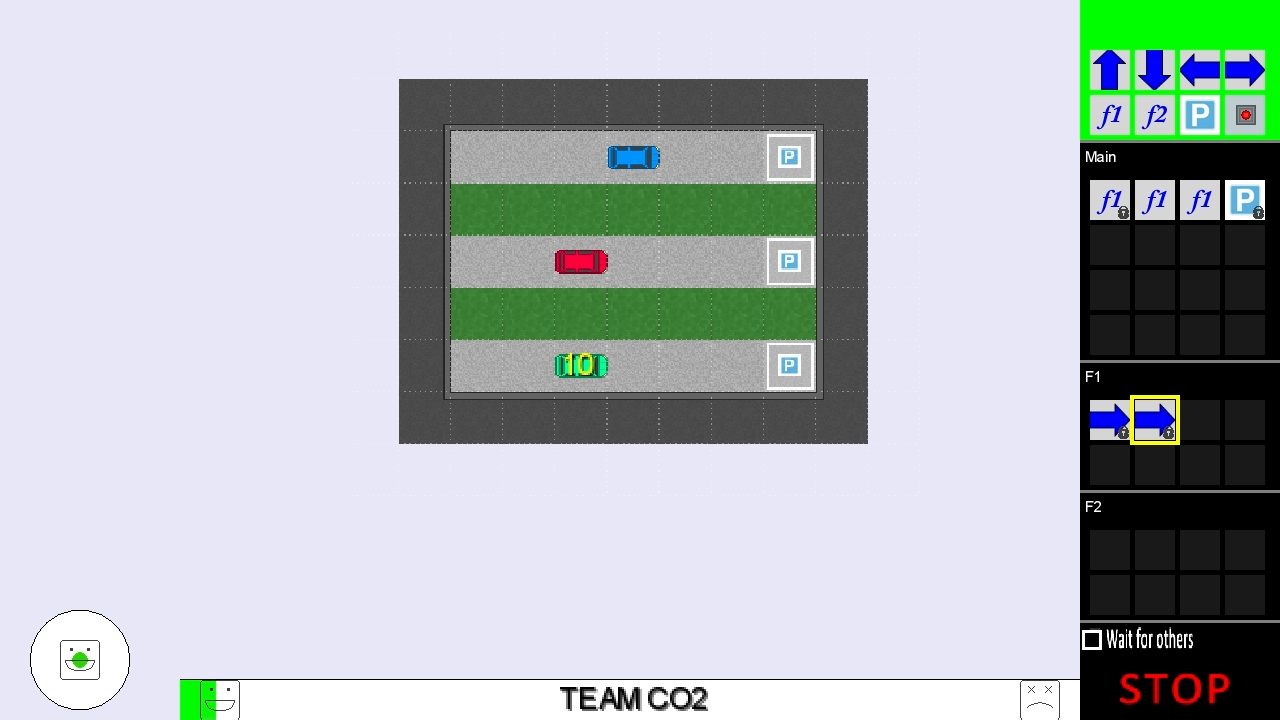
This is a grid based puzzle game where you use commands and functions to control cars to get them to parking spaces. The game used three computers connected to a server so each player controlled a car. The purpose of the game was to teach basic concepts of programming, problem solving and teamwork, while adding a small message on environmental awareness. The game was made for a nationwide school event called Blue Fusion, which students from schools around the Hampshire area came to compete against each other by playing games like Clean Commuter in order to gain interest in science, technology and maths.

Untitled-0  Untitled-1

I was the project lead in a team of five, as well as the person responsible for the in-game graphics and most of the rendering using LibGDX. We worked on the game for over five months and we were able to complete the game in time for the week long event. Unfortunately, due to copyright and licensing, the game will not be available for download from me on any site, but I hope you appreciate these screenshots.

So after today, things should be slowly going back to normal. I should be giving a few updates on Secret of Escape within a few weeks or so, I’m also considering doing the Insanity Jam, which is a small games jam where you make a game based on whatever you receive from the random game idea generator with the Insanity option on for totally bizarre ideas. But for now I’ve got some work to catch up on.

Talk to you all later!

#FlappyJam Entry and my view of the fiasco

In light of what has become 2014’s first phenomenon, I’m announcing my entry into the #FlappyJam, the games jam in tribute to Flappy Bird, and protest from the backlash it has gotten from being taken down. While it took me as long to make as the original game (less than three days), the story surrounding Flappy Bird made me unsure about whether I should put it up online or not. This game is Tappy Bird.


Go here to download and play.

Continue reading

Global Games Jam 2014 Quick PostMortem

For another year, Global Games Jam has ended, and what a time was had at Stafford Campus during the event. After 48 hours of work we were able to pull off most of what we had hoped and it’s time for me to give you my report. I will explain what happened, what problems were faced and what we produced.

https://i0.wp.com/csufvgdc.com/wp-content/uploads/2014/01/event_id_215_global_game_jam.png

Continue reading